Card sorting for Information Architecture
Case: organise fresh products in Woolworths
By: Muchammad Ersan Ramadhan
Period : August 2019
picture by Unsplash.com
Overview
This project analyzed how users intuitively organised fresh products in Woolworth supermarket. The main aim is to identify relevant users, sort items in corresponding group and analysing the outcome.
Method
For this project, I had chosen card sorting methods since the purpose was to organized the items based on the people's preference. So people would understand what products that the supermarket have and where to find those items.
Study Design
Product Items
Vegetable products - 30 items of vegetables products that were retrieved from Woolworth website. List of all items were already on the sub-category under vegetable products.

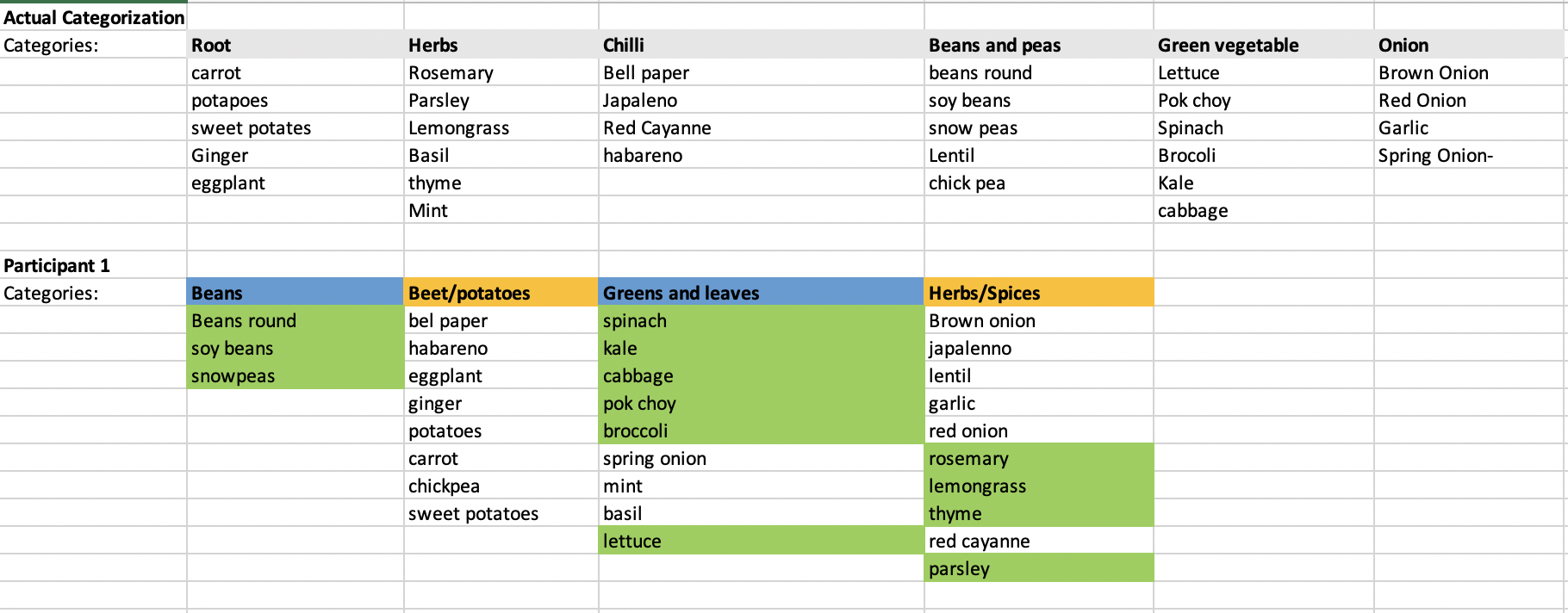
Actual groups and list of items
Potential Users
For this project, I chose the participants from different background of education, gender, familiarity with vegetables and frequency of supermarket visit. I recruited 4 different participants since there were limited time to finish this project. Half of the participants were woman and half of it were man.
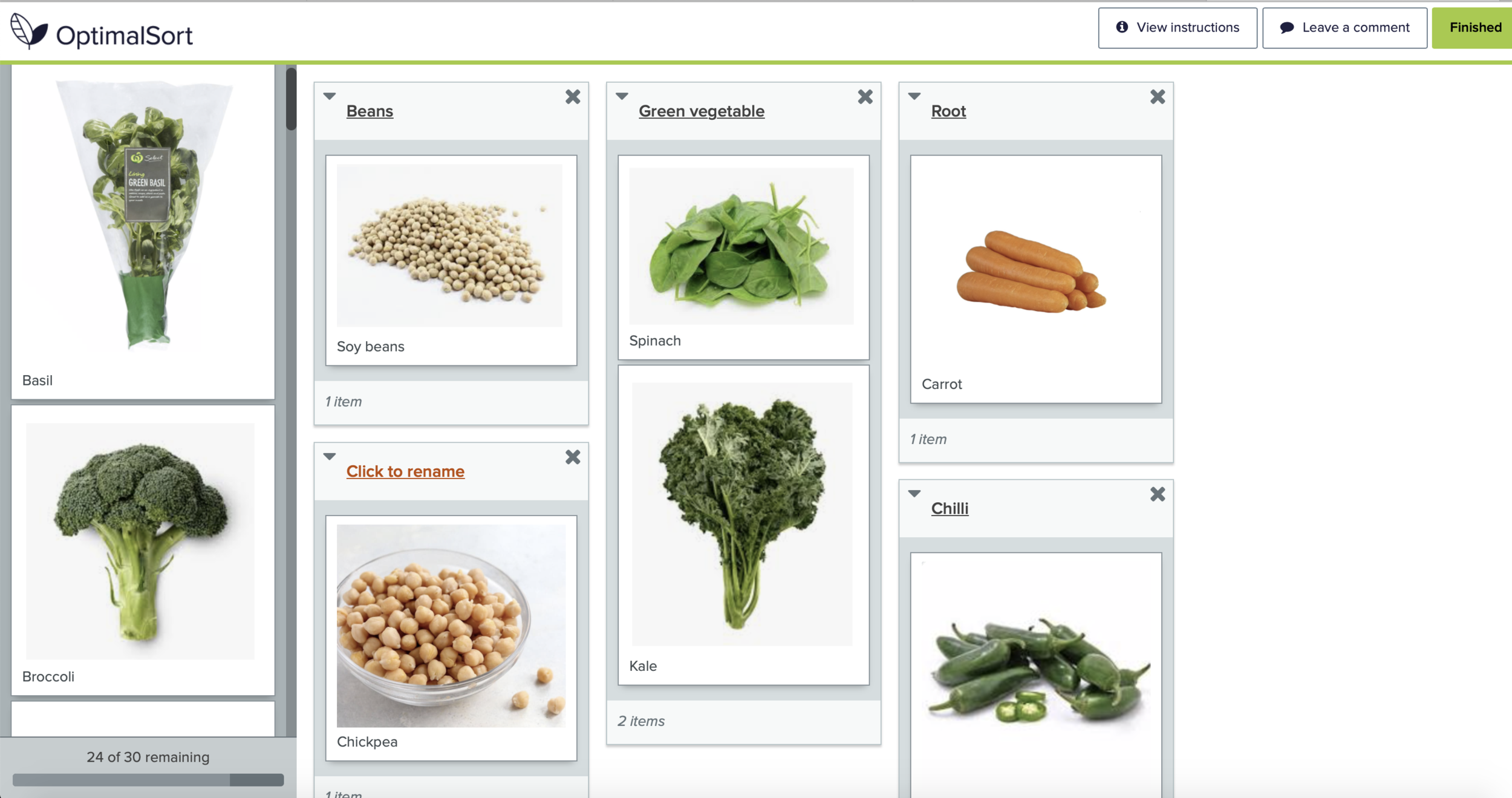
online card sorting
Tools for Card Sorting
I was using online card sorting application which provided by Optimalworkshop.com. That website was free to use but have some limitation, such as the maximum of items were only 30 items, and maximum of the participants were just 10 participants.
Methods for card sorting
In this project, I used the open method and moderated, which the participants were ask to grouped the chosen items freely and then author asked about why they make such grouping (interview).
Open methods
Each participant was freely making the groups. They also performed the card sorting individually to make sure every participant’s opinion had its own uniqueness. The testing cards showed the name and pictures of the items, so that the categorisation would not create any confusion or un-understandable on the contexts.
Moderated methods
I was on the same place with the participant when they were doing the card sorting practice to make sure the participants were not using internet or finding the other references. If the participant searching the other resources, the data results will be bias and doesn’t have uniqueness. Also, I would be asking some questions after they finished the tasks regarding their grouping reasons and to collect qualitative data.
Environment test
The locations I chose to perform card testing with the participants were on university library space, but it’s not on the private room (meeting room). The reason was because the there was very quiet and cozy so that the participant would be focus on the practice without any distraction.

Picture of Giblin Euroson Library for doing practice
Test Procedures
Each participant were asked to fill the pre questionnaires before doing card sorting and post questionnaires after the practice.
The steps of the user’s research study are explained below;
The participant and the author are using the same laptop at the same place.
The author shows and explain the research’s aim and how to perform the card sorting.
Participant fill the pre-questionaries.
Participant doing card sorting practice, the list of items will have random order due the provided feature by optimalworkshop.
Participant fill post questionaries.
Result
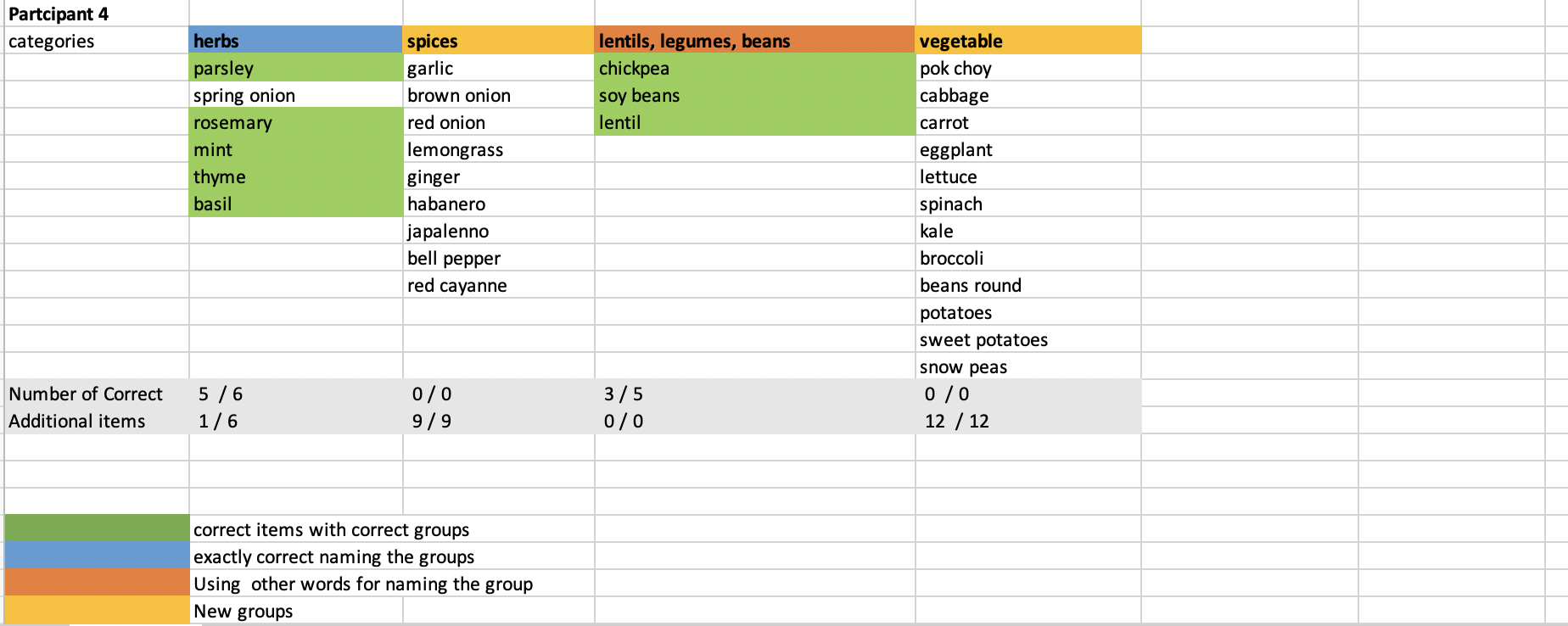
Analysis
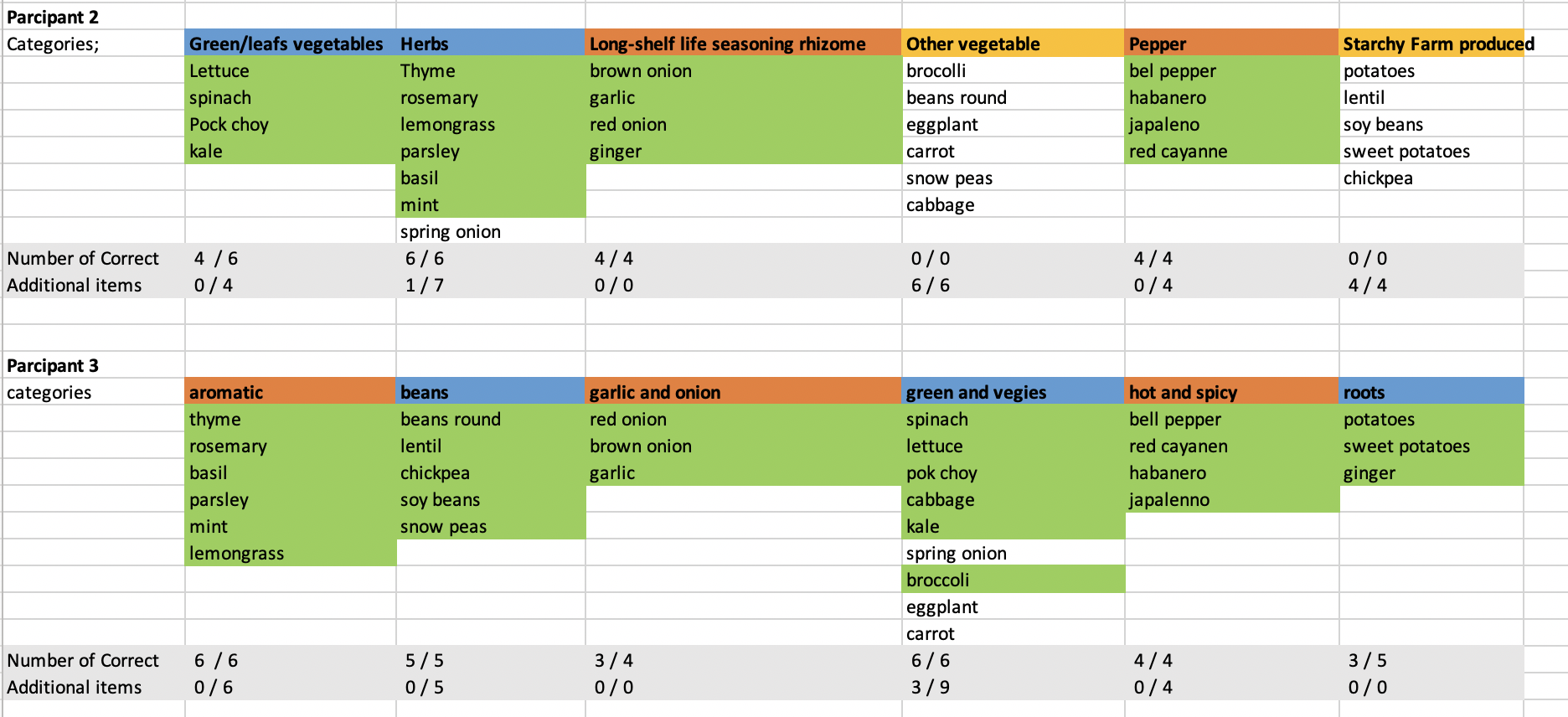
Based on data analysis, author generated some particular outcomes, which are;
Several participants were using different group name which actually had similar meaning with the actual group name.
Participants had created two new groups.
Standarisation of groups and 2 new groups
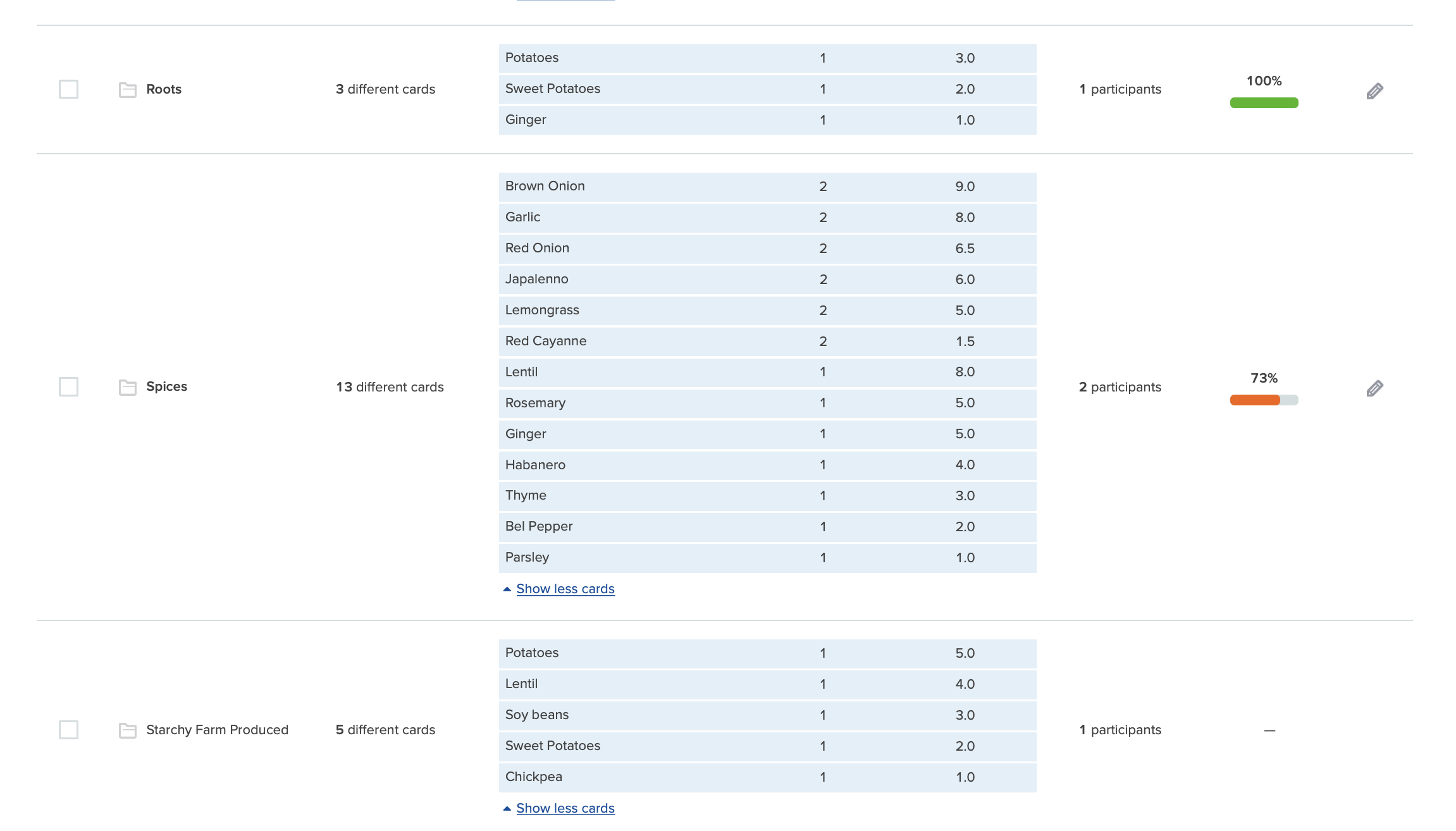
Several groups which had similar meaning were standardised, while other groups which had different meaning were not being standardised. Since the participants were only four, if there was a group name which didn’t have any connection with other groups and it was made only by one participant, then the group will be unstandardised, thus it wasn't used for the analysist.
As the result, the standardisation process generated 6 groups, which are, Beans & peas, Garlic & onions, Greenvegetable, Herbs, chilli, and new groups called spices and other vegetables.
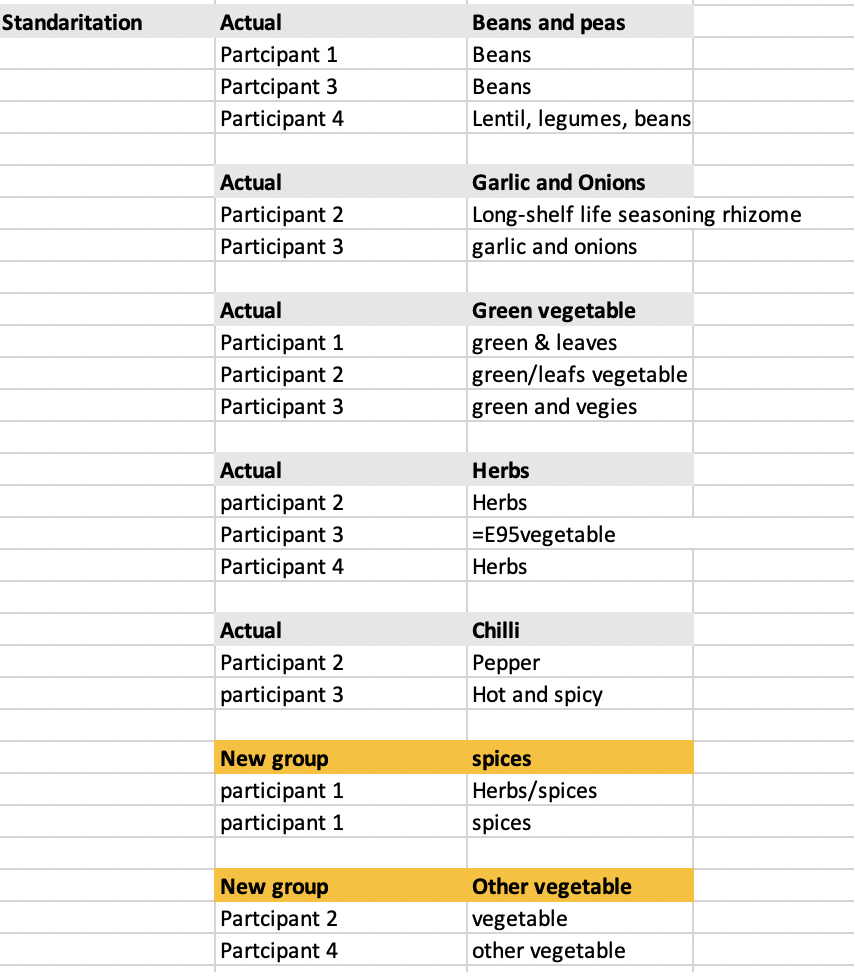
Standarisation results
Participant's agreement about the created groups
As can be seen on the figure below, Chilli had 100% agreement from two users. This agreement means that participants were grouping all of selected items into correct groups. Other groups like Garlic & onions, and spices had 73% and 88% of agreement score respectively. Furthermore, three participants agreed on herbs which had the highest score of agreement (90%), and it was followed by beans and peas (73%), and Green vegetable (67%).
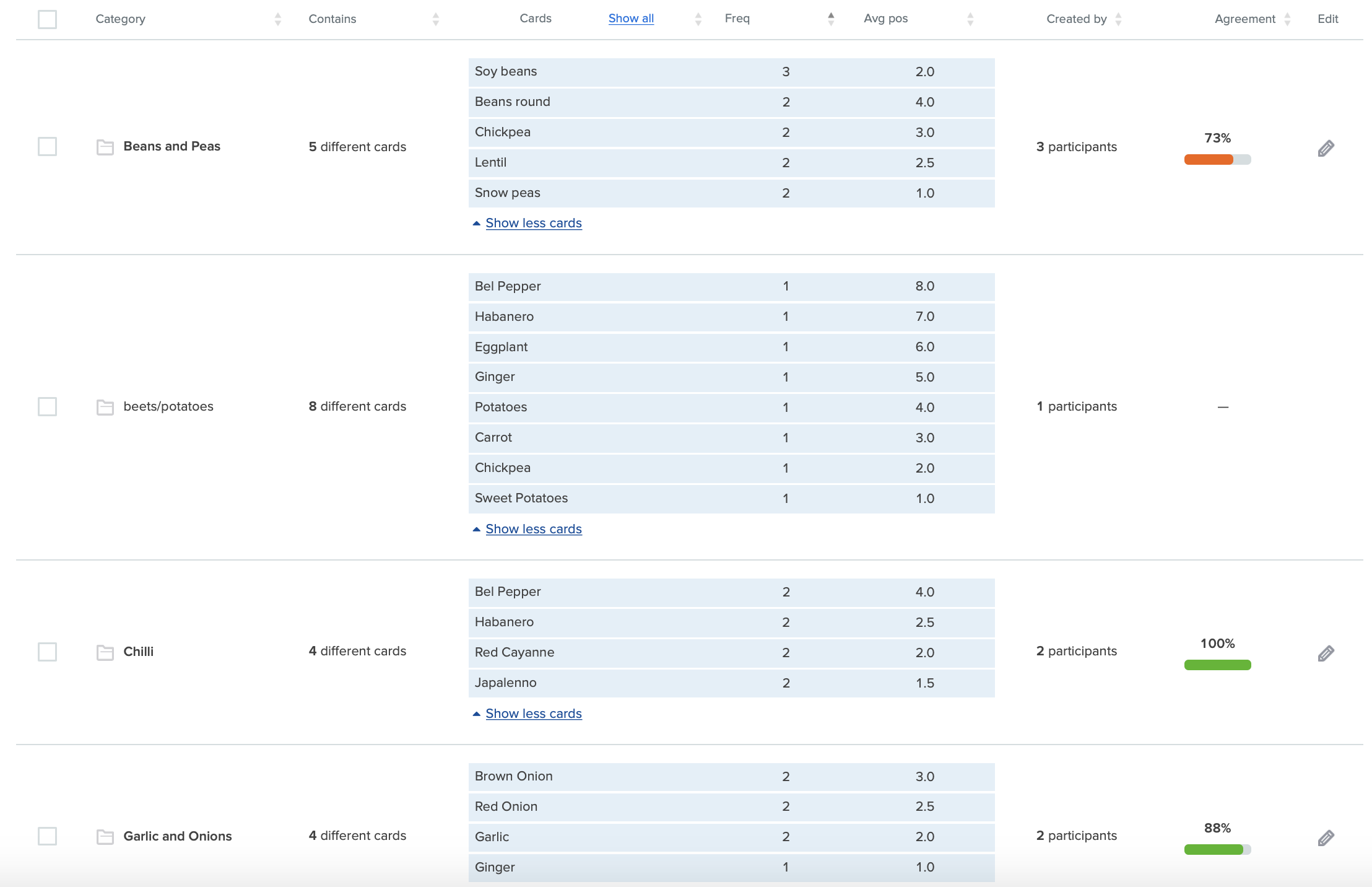
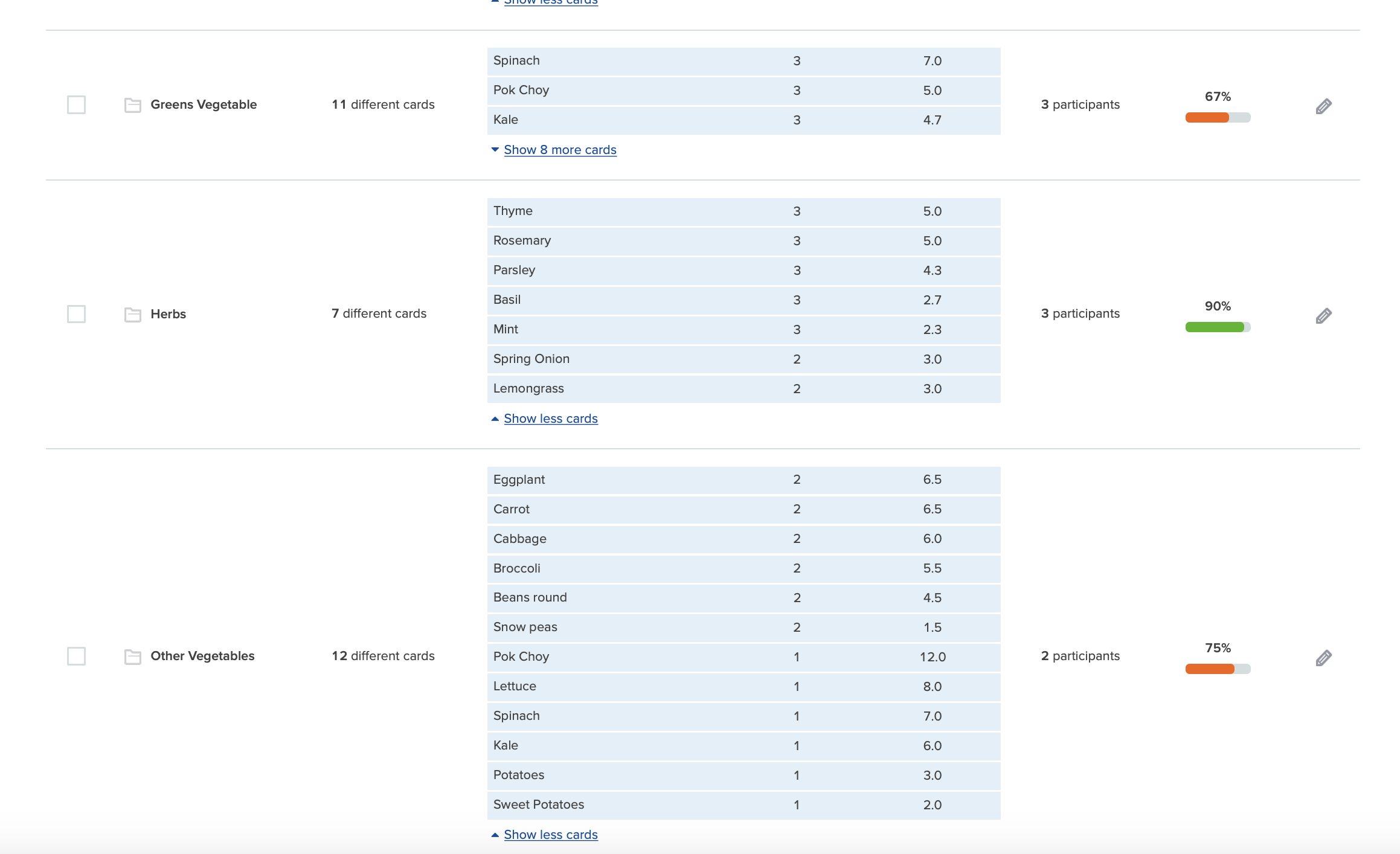
Standardisation Grids
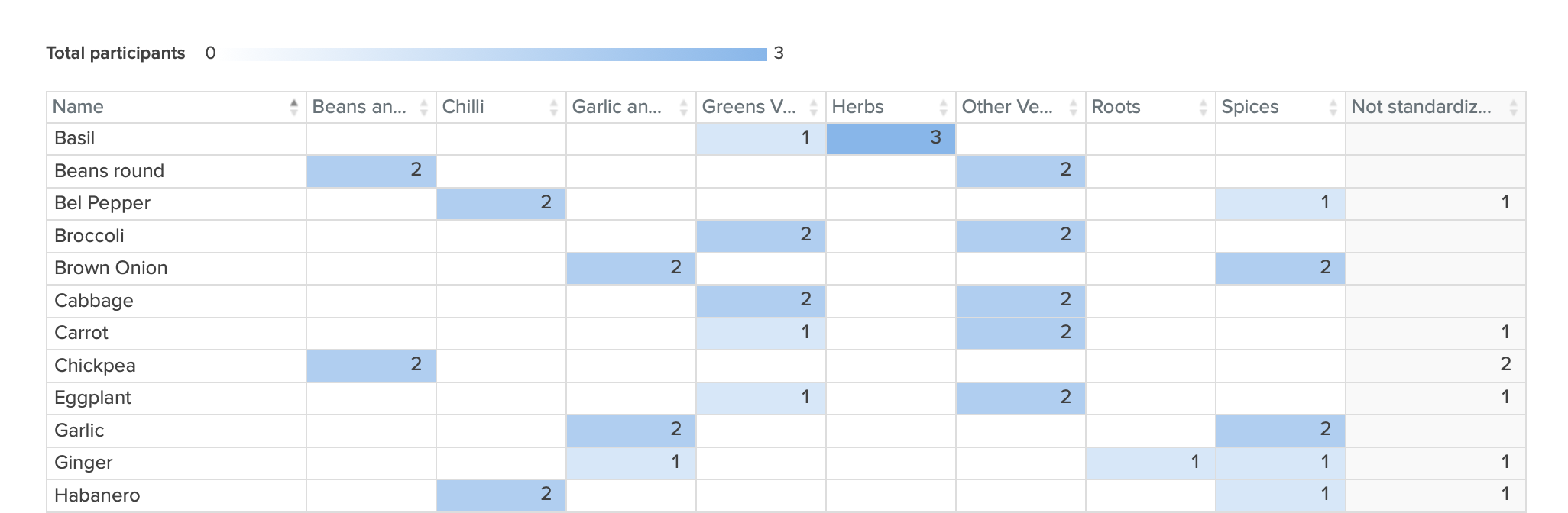
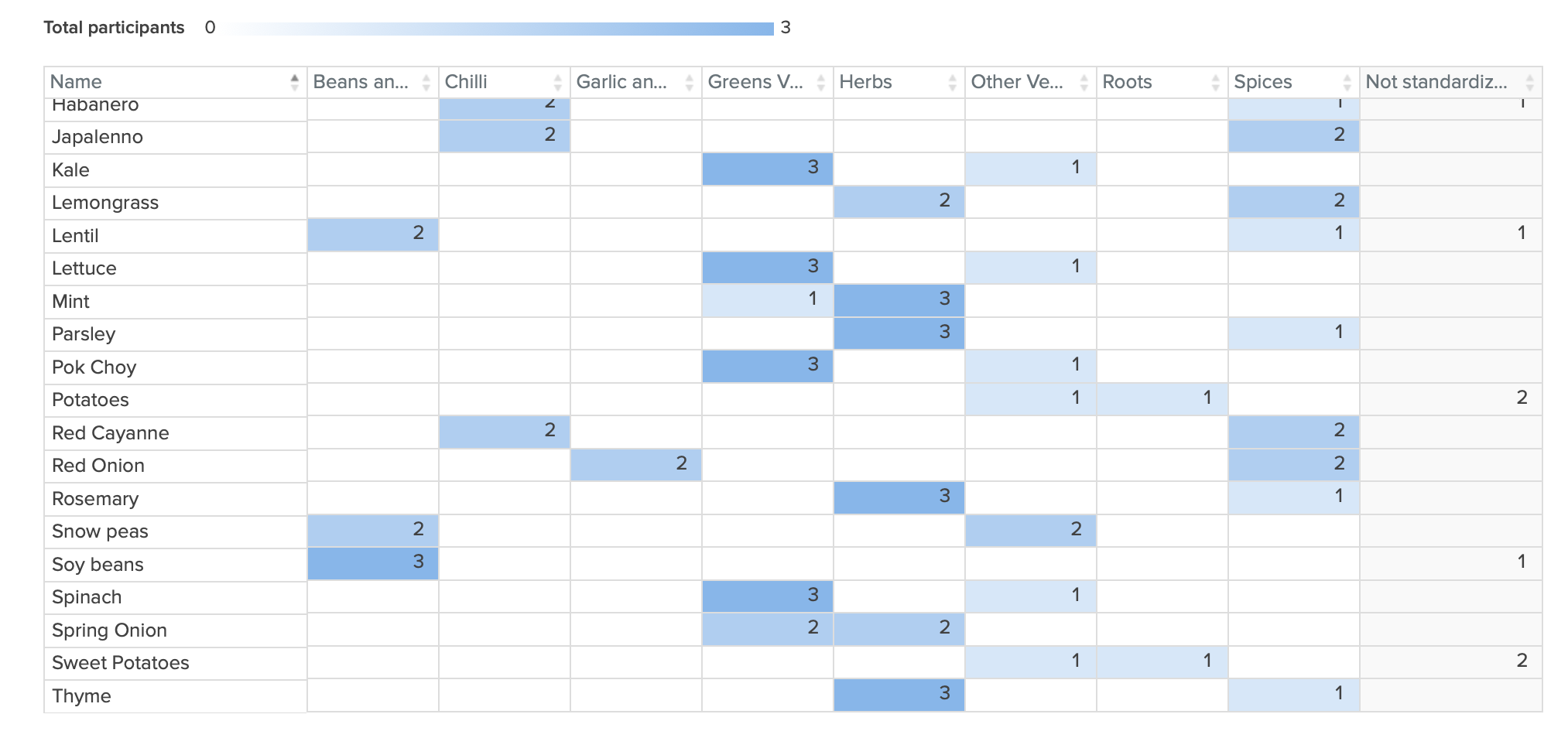
Every item on the list were showed in the left-hand side with vertical alphabetic order, while the top column was indicated the name created groups by participant (after standardisation). Overall, the darker of the cell was indicating more participants agreeing with the grouping.
There were 3 groups which had 3 participants who agree with the items on that groups, which are;
Participants put thyme, rosemary, parsley, mint, and basil into herbs group.
Participants put soybeans into beans and peas group.
Participants put spinach, pok choy, lettuce, and kale into green vegetable group.
Conclusion
To sum up, I might conclude several points about my findings, which are;
Some participants gave name to certain groups with unique name, while the others gave similar name with the actual name.
Standardization process generated 6 groups, which are, Beans & peas, Garlic & onions, Green vegetable, Herbs, chilli, and new groups called spices and other vegetables.
The difference in educational background didn’t give impact to the group naming
The difference in gender and familiarity about vegetable made significant difference grouping behavior.
The open card sorting method were particularly gave unique groups and the percentage of agreement would not be as high as the other methods.