Voice-Based Chatbot for Melbourne Zoo
Master's Research Project · University of Melbourne · 2020
Tag: User Research, Conversational UX, Voice Interface, Academic Project
picture by Personal documentation
Problem
Visitors and staff both struggled with information access at the zoo
Melbourne Zoo had two unresolved pain points operating simultaneously. Visitors, whether coming for leisure or education had difficulty accessing timely, contextual information about animals and exhibits without disrupting the animals or other guests. Meanwhiile, Staff faced a high volume of repetitive visitor inquiries that pulled resources away from other responsibilities. The opportunity was a shared solution: a voice-based chatbot embedded in kiosks that let visitors ask questions naturally, on demand, without disturbing the environment around them.
My role
Lead researcher and experience designer
I led the end-to-end research process, which are designing the study, recruiting participants, conducting all 11 remote interviews, analyzing the data, synthesizing insights, and producing a design proposal for the chatbot experience.
This was an individual project completed during the COVID-19 period, which required adapting the original in-person fieldwork plan to a fully remote format using Skype and Zoom.
Process
2 sections semi-structured interviews with 11 participants
I recruited 11 participants (8 women, 3 men, ages 24–44, median age 25) and conducted remote semi-structured interviews structured in two sections. Section one explored participants' lived zoo visit experience: their motivations, behavior patterns, and how they currently used technology in the zoo. Section two introduced a video demonstration of an existing chatbot deployed at Melbourne Zoo, then gathered reactions perceived usefulness, friction points, and ideas for improvement.
The semi-structured format allowed participants to speak freely, surfacing insights that a closed questionnaire would have missed.
Research constraint: Because direct observation and hands on testing with the physical kiosk were not possible under pandemic restrictions, findings were based on recalled experience and video prompted reactions, a limitation acknowledged in the final analysis.
Key decisions
Three design principles derived from research findings
Analysis of interview data produced three findings that shaped all subsequent design decisions:
Decision 1 — Design for both educational and leisure visitors: Findings showed voice chatbot utility was not limited to visitors with an explicit learning agenda. Casual visitors also responded positively to on-demand animal information, meaning the product needed to serve curiosity driven queries as much as structured educational ones.
Decision 2 — Prioritize conversational UX over transactional UX: Participants responded most positively when chatbot interaction felt like a natural human conversation. This ruled out command response interfaces and pointed toward natural language understanding with follow up prompting, conversational UX as the core design paradigm.
Decision 3 — Physical design of the kiosk matters as much as the interaction: Participants noted that how the device looks and where it is positioned significantly influences whether they approach it at all. A poorly positioned or visually uninviting kiosk would suppress engagement regardless of how good the software experience was.
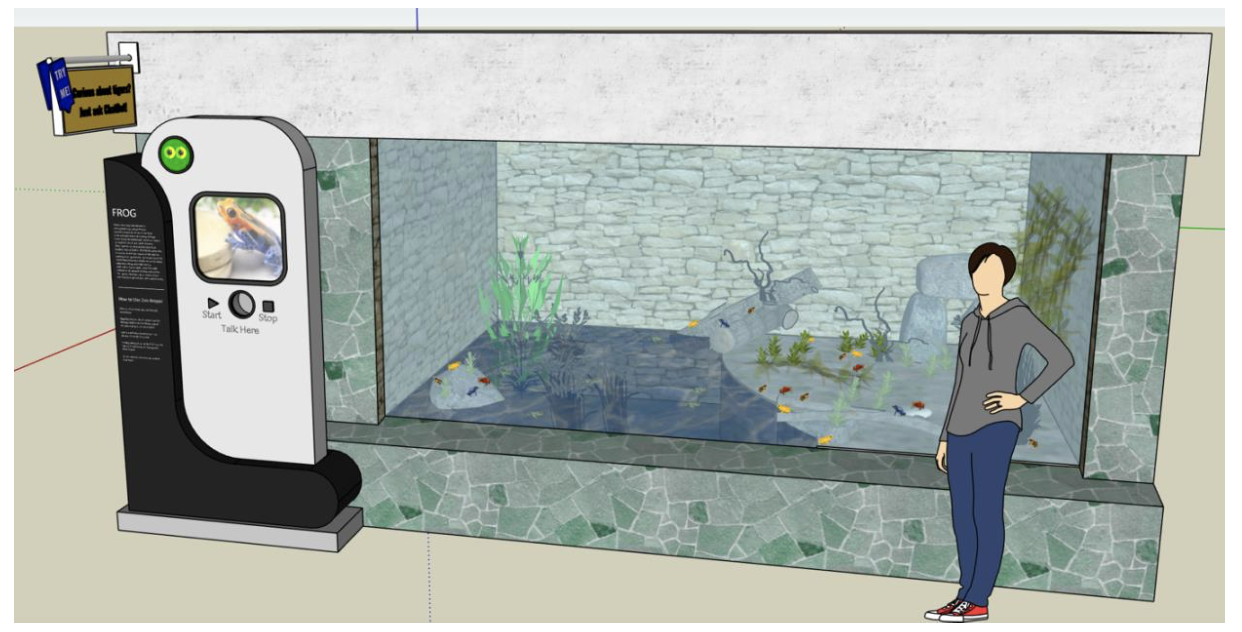
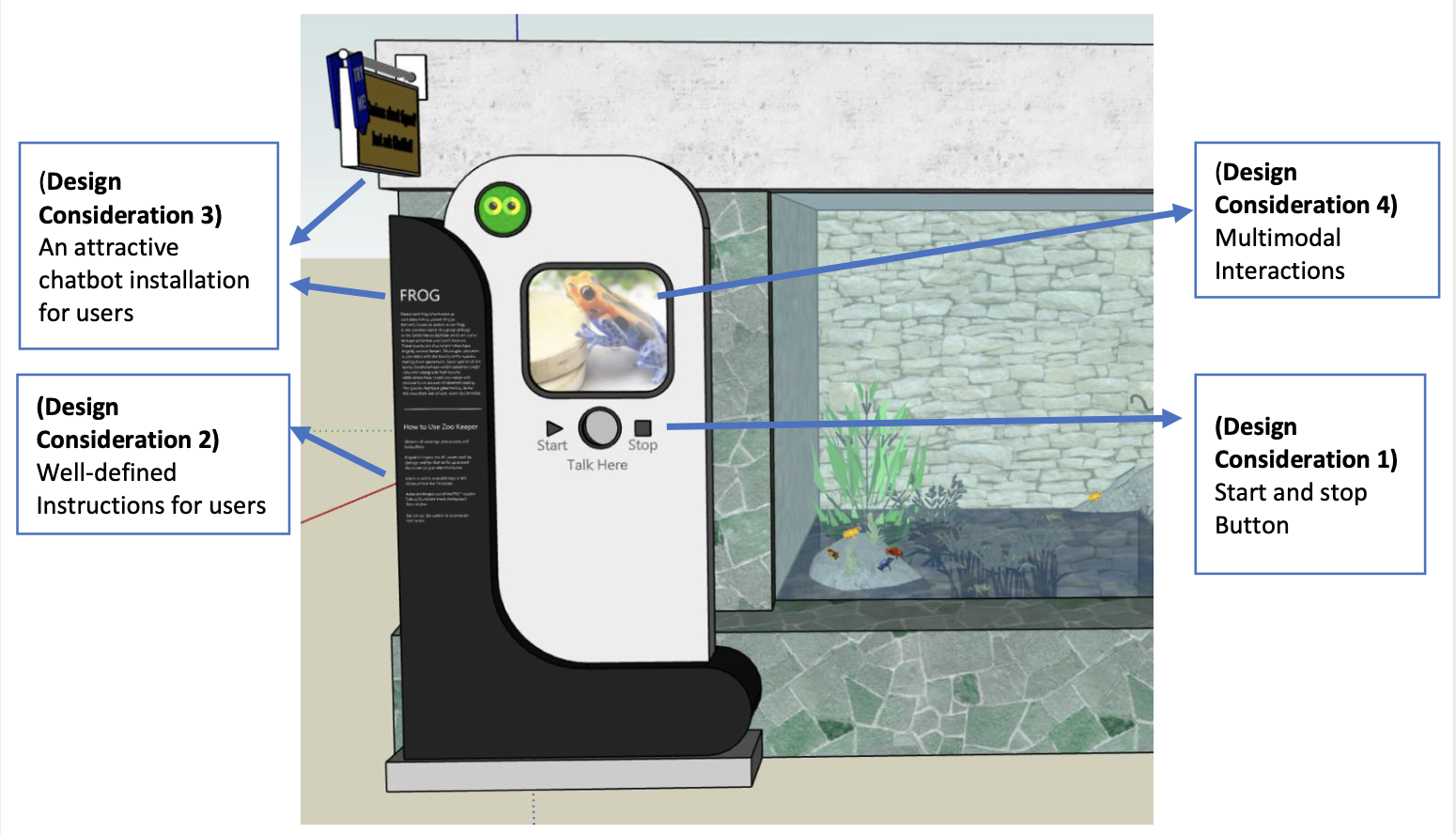
Considerations for designing Chatbot physical interfaces in zoos
The Start and stop button features
Well-defined instructions for users
An attractive chatbot installation
The application of multimodal interactions
Outcome
Design proposal and three validated research contributions
The project delivered a voice-based chatbot design proposal for Melbourne Zoo kiosks, grounded in validated qualitative findings. While the pandemic context prevented usability testing and quantitative validation, the research produced 3 actionable design principles conversational UX framing, inclusive visitor targeting, and physical kiosk design integration, that constitute meaningful product guidance for any zoo or public venue considering voice based visitor assistance. The study also documented the methodological limitations of remote only research, contributing to best practices for conducting UX research under restricted access conditions.
11 Participants interviewed
2 Research sections per interview
3 Core design principles validated